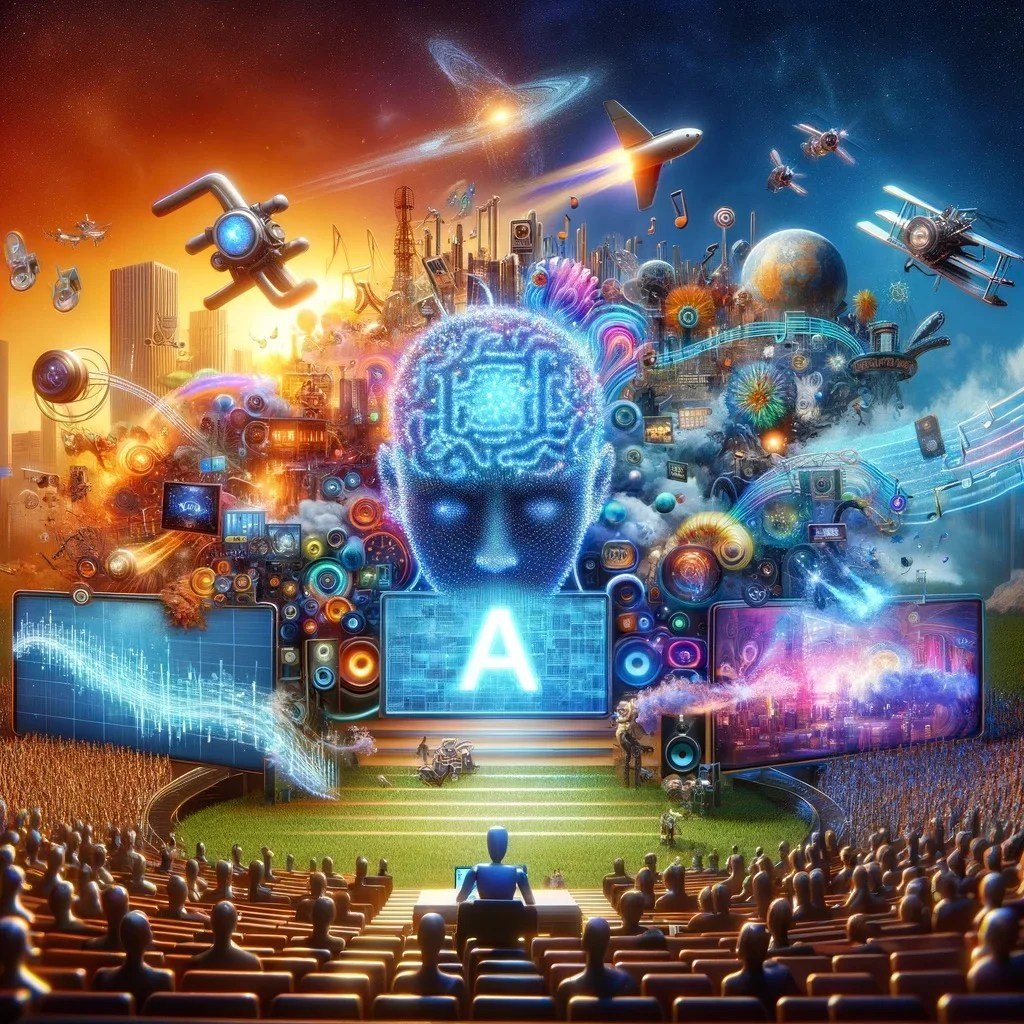
Imagine a world where your deepest desires for adult entertainment are met not just by passive viewing, but by interactive, hyper-personalized experiences that learn and evolve with you. This isn't science fiction; it's the near future, driven by the seismic shifts that AI is bringing to the adult entertainment industry. The future of AI in adult entertainment isn't merely about creating more explicit content; it's fundamentally reshaping how we understand interaction, intimacy, and even what "entertainment" truly means in a digital age.
We're talking about a transformation that moves beyond traditional models, offering unprecedented levels of customization, accessibility, and a nuanced approach to connection that many didn't think possible. But with this incredible potential comes a landscape of ethical considerations and new responsibilities.
At a Glance: Key Takeaways on AI's Impact
- Hyper-Realism: Generative AI creates incredibly lifelike images, videos, text, and voices, pushing the boundaries of what's possible in content creation.
- Deep Personalization: AI tailors experiences to individual preferences, offering customizable avatars, scenarios, and adaptive narratives in real-time.
- Virtual Companionship: AI-powered chatbots and companions are fostering new forms of virtual intimacy through sophisticated natural language processing and emotional simulation.
- Ethical Imperatives: Strict age verification, clear AI labeling, robust data privacy, and protection against non-consensual deepfakes are paramount for responsible development.
- Accessibility & Niche Content: AI makes it commercially viable to produce content for highly specific interests, enhancing inclusivity and reducing traditional production hurdles.
- Complement, Not Replacement: AI is largely seen as a powerful tool to enhance and complement human performers, not to render them obsolete.
- Psychological Shifts: These innovations offer new avenues for connection, reducing isolation, challenging stigmas, and influencing societal perceptions of intimacy.
The New Frontier: Hyper-Realistic Content & Personalization
The bedrock of AI's revolution in adult entertainment lies in generative AI. This isn't just about Photoshopping; it's about systems that learn from vast datasets to create entirely new, hyper-realistic content from scratch. Think images, videos, voices, and even written narratives that are virtually indistinguishable from human-created work.
This technology allows for an unprecedented level of content generation. You can conjure up specific scenarios, tailor character appearances down to the minutia, and even create voices that match your precise preferences. The implications for personalization are enormous. Users can engage with custom avatars that perfectly align with their desires, exploring scenarios that were once niche, complex, or commercially unviable for traditional production methods. This democratizes access to diverse interests, allowing individuals to explore their fantasies in a safe, controlled environment.
Consider the technical leap: algorithms analyze patterns, textures, movements, and speech from existing content, then synthesize entirely new permutations. This means that a user might request a scenario involving specific attributes, a particular setting, or a unique emotional tone, and the AI can generate it. These capabilities are rapidly evolving, with a growing number of No sign-in AI video generators making this kind of tailored content creation increasingly accessible. It’s moving us into an era where adult entertainment isn't just consumed; it's co-created with the user at the helm.
Beyond mere aesthetics, this generative power also offers potential benefits for reducing exploitation risks often associated with traditional adult content production. By creating entirely artificial performers and scenarios, the industry can explore ways to minimize reliance on human actors in potentially vulnerable situations, shifting the focus to consensual, ethically-produced digital experiences.
Beyond Passive Viewing: Intelligent Interaction & Companionship
AI is also fundamentally changing how we interact with adult entertainment, moving it from a passive viewing experience to an active, engaging dialogue. This evolution is driven by sophisticated machine learning algorithms and breakthroughs in natural language processing (NLP).
Smart Recommendations & Adaptive Narratives
Just like your favorite streaming service suggests movies, AI in adult entertainment learns your viewing habits, preferences, and interaction patterns. These sophisticated recommendation algorithms then deliver highly tailored content, ensuring you're constantly presented with material that aligns with your specific interests. This isn't just about what you've watched; it's about discerning deeper patterns in your engagement, leading to incredibly precise suggestions.
But it goes further. Imagine interactive experiences where the narrative isn't fixed but adapts in real-time. This is the promise of "choose-your-own-adventure" style content, powered by AI decision trees. Your choices, your mood, and even your emotional cues (if captured through biofeedback or nuanced text analysis) can subtly shift scenes, character reactions, and story outcomes. This level of adaptive entertainment boosts engagement and satisfaction, creating a truly unique and immersive journey every time.
The Rise of AI Companions: Virtual Intimacy Unveiled
Perhaps one of the most transformative aspects of AI in this space is the emergence of AI companions. These are not just simple chatbots; they leverage advanced NLP to engage in nuanced, context-aware conversations that can simulate emotional intelligence. They remember past interactions, understand subtle cues, and can respond in ways that foster genuine virtual intimacy.
This is a critical breakthrough for many individuals. NLP's ability to interpret, understand, and generate human-like dialogue means these AI companions can engage in deep, empathetic conversations, offering a form of connection that might be missing in a user's real life. They can act as confidants, playmates, or even romantic partners within a virtual space, fulfilling unmet emotional needs and influencing perceptions of real-life relationships.
The goal isn't necessarily to replace human connection but to offer an alternative or supplementary form of interaction. For individuals experiencing isolation, shyness, or those exploring aspects of their sexuality that feel too vulnerable to share in real-world settings, AI companions provide a safe, non-judgmental space for exploration and connection.
The Ethical Compass: Navigating Responsible AI
The immense power of AI in adult entertainment necessitates an equally robust framework for ethical considerations. This isn't a Wild West; it's an evolving landscape demanding vigilance, transparency, and a commitment to user well-being.
Non-Consensual Deepfakes: A Clear Red Line
One of the most critical ethical concerns revolves around deepfakes—AI-generated media that superimposes one person's face onto another's body, or synthesizes their voice. While generative AI is used for creating new content with fictional characters, the misuse of this technology to create non-consensual deepfakes using real individuals is a severe violation of privacy and consent. The industry and platforms are committed to strict protections against such malicious uses, often employing advanced detection technologies and zero-tolerance policies. The distinction between ethically generated fictional AI content and harmful deepfakes of real people is paramount and must be clearly enforced.
Transparency and Trust: Labeling AI Content
To maintain user trust, transparency is key. You'll increasingly see clear labeling of AI-generated content versus real performer content. This might come in the form of "AI-Generated" badges, disclaimers, or specific platform features that denote the origin of the media. This ensures that users are always aware of what they are consuming, allowing them to make informed choices.
Age Verification and Digital Boundaries
The adult entertainment industry has always grappled with age verification, and AI brings new complexities. Robust systems are essential to ensure that AI-generated adult content remains inaccessible to minors. Furthermore, AI's ability to create deep emotional connections with companions raises questions about digital boundaries and the psychological impact on users, necessitating ongoing dialogue about responsible design and usage.
Data Privacy: Protecting Your Information
Personalization relies on user data, including viewing habits and interaction patterns. This makes data privacy a top concern. Platforms integrating AI must implement robust data protection methods, such as anonymization of user data and transparent consent mechanisms. You should always know what data is being collected, how it's being used, and have clear control over your personal information. Adherence to global data protection regulations (like GDPR) is not just good practice, but a legal necessity.
Legality and Compliance
The legality of AI-generated adult content hinges entirely on compliance with applicable laws. When created ethically, with proper age gating, clear labeling, and without involving non-consensual use of real individuals, AI-generated content is generally legal. Platforms commit to ensuring their AI offerings comply with all regulatory frameworks, which are constantly evolving alongside the technology itself.
Complement, Not Replacement: The Human Element
It's a common misconception that AI will completely replace human performers. Most experts and industry leaders view AI as a powerful complement. It can create new niches, reduce production costs for specific types of content, and offer personalization that human performers simply cannot replicate on a mass scale. However, the unique authenticity, spontaneity, and human connection offered by real performers will likely always hold a distinct place in the industry. AI expands the pie; it doesn't necessarily devour it.
The Deep Dive: Psychological & Societal Ripples
The integration of AI into adult entertainment isn't just a technological shift; it's a cultural and psychological one. The profound impact on individuals and society warrants careful consideration.
New Avenues for Connection and Companionship
For many, AI-driven adult entertainment offers novel avenues for connection, companionship, empathy, and understanding. This is particularly true for individuals experiencing isolation, social anxiety, or those who struggle to form intimate connections in traditional ways. An AI companion that listens, remembers, and responds with simulated emotional intelligence can fulfill deeply rooted needs for human-like interaction.
Studies and anecdotal evidence suggest that these alternative forms of intimacy are increasingly being recognized and accepted. Cultural attitudes are shifting as technology blurs the lines between the digital and the real. The stigma around seeking connection through virtual means may diminish as the sophistication and accessibility of AI companions grow.
Fulfilling Unmet Emotional Needs
AI platforms, particularly those focused on companionship, can be designed to address specific emotional deficits. Whether it's the need for affirmation, comfort, playful banter, or even a sense of being understood, AI's emotional simulation can be remarkably effective. This raises important questions about how these virtual relationships might influence perceptions of real-life relationships, for better or worse. Will they set unrealistic expectations, or will they serve as a safe space for practice and self-discovery, ultimately enhancing real-world interactions? The answer likely lies in individual temperament and responsible platform design.
Safer Spaces for Exploration and Well-being
AI-driven adult entertainment can offer a genuinely safer space for sexual exploration. Without the social pressures, judgments, or potential risks associated with real-world interactions, individuals can freely explore their desires, identities, and boundaries. This can promote emotional well-being by reducing shame and guilt often associated with certain sexual interests, fostering healthier, more inclusive attitudes toward human connection and intimacy. It allows for a level of privacy and control that can be empowering for personal growth and self-discovery.
Practical Realities: What's Happening Now and What's Next
The future isn't a distant horizon; many elements are already in play, with rapid advancements continuing to reshape the landscape.
Current Applications and Innovations
Today, companies are already leveraging AI in several practical ways:
- Smart Content Recommendations: As mentioned, intelligent algorithms analyze your viewing history to suggest new content, making discovery more efficient and personalized.
- AI-Enhanced Video Quality: Older content is getting a new lease on life with AI upscaling, improving resolution, frame rates, and overall visual fidelity, enhancing the viewing experience.
- Initial Interactive Experiences: Some platforms offer nascent "choose-your-own-adventure" style content where AI guides the narrative based on user input, laying the groundwork for truly adaptive storytelling.
- Early AI Companions: Text-based and voice-based AI chatbots are already providing companionship, with capabilities constantly expanding through more sophisticated NLP models.
The Near Future: Immersive VR Intimacy and Real-Time Adaptation
The real transformation lies in the convergence of AI with other immersive technologies, particularly virtual reality (VR). Imagine VR intimacy experiences where AI-driven characters are not just static models but fully interactive beings that adapt in real-time to your desires and emotional cues.
This means:
- Lifelike Avatars: AI will create hyper-realistic avatars that move, speak, and emote with unprecedented fidelity within VR environments.
- Dynamic Storylines: Narratives will truly shift based on your verbal input, gestures, and even biometric feedback.
- Emotional Responsiveness: AI companions will gauge your mood and respond empathetically, creating deeply engaging and emotionally resonant interactions.
- Sensory Integration: Haptic feedback devices, combined with AI-driven scenarios, will aim to stimulate multiple senses, enhancing immersion.
These developments are expected to significantly shape societal perspectives on intimacy. By offering controlled, safe, and highly personalized spaces for sexual exploration and connection, AI can help reduce stigma, promote emotional well-being, and ultimately foster healthier, more inclusive attitudes toward human connection. It's a journey into understanding what it means to connect, both with technology and with ourselves.
Common Questions & Misconceptions About AI in Adult Entertainment
Let's clear up some common queries and separate fact from fiction.
Will AI replace human adult performers?
Highly unlikely. While AI can create fantastic synthetic content and companions, the unique human element – the authenticity, spontaneity, and emotional depth of real performers – remains distinct. AI is generally seen as a complement, expanding the market and offering new forms of entertainment, rather than directly replacing traditional human-led content. It creates a new category, much like CGI in films didn't eliminate actors.
Is AI-generated adult content legal?
Yes, generally, when it complies with applicable laws. This means strict adherence to age verification, clear labeling that it's AI-generated (not falsely marketed as real), and most importantly, not involving non-consensual deepfakes of real people. Platforms that host or create such content are committed to ensuring legal compliance and ethical guidelines.
How is my data protected with personalized AI experiences?
Data privacy is a paramount concern. Reputable platforms use robust methods like data anonymization, which strips identifying information from user data before it's used to train AI models or personalize experiences. Furthermore, they are bound by transparency regarding data usage and require explicit user consent. Always check a platform's privacy policy.
What about the risk of non-consensual deepfakes?
This is a critical ethical challenge the industry takes very seriously. AI platforms are implementing strict measures, including advanced detection algorithms and strong policies, to prevent the creation and distribution of non-consensual deepfakes using real individuals. The focus of ethical AI development is on generating fictional characters and scenarios, not exploiting real people.
Can AI companions lead to unhealthy attachments or isolation?
This is a valid concern. While AI companions can reduce isolation and fulfill emotional needs, there's an ongoing dialogue among technologists and ethicists about the psychological impact. The key lies in designing AI that promotes healthy engagement, potentially through features that encourage real-world interaction, and by users maintaining a clear understanding of the AI's nature. It's a tool, and like any tool, its impact depends on how it's used.
Embracing the Evolving Landscape: A Call to Thoughtful Engagement
The future of AI in adult entertainment is not a static destination but a rapidly evolving journey. It promises hyper-personalized content, deeply engaging virtual intimacy, and new avenues for self-exploration and connection. Yet, this incredible innovation is inextricably linked with significant ethical responsibilities, demanding continuous vigilance regarding age verification, content labeling, data privacy, and protection against misuse like non-consensual deepfakes.
As consumers, our role involves demanding transparency, understanding the technologies we engage with, and making conscious choices about how we interact with these new forms of entertainment. For developers and policymakers, the challenge lies in fostering innovation while ensuring robust ethical frameworks and regulatory oversight.
This isn't just about the technology itself, but about its profound impact on human psychology, societal norms, and our very definitions of intimacy and connection. By engaging in ongoing dialogue among technologists, ethicists, and policymakers, we can navigate this exciting, complex landscape responsibly, upholding user trust and well-being as the cornerstone of this transformative era. The conversation has only just begun.